

June 2026
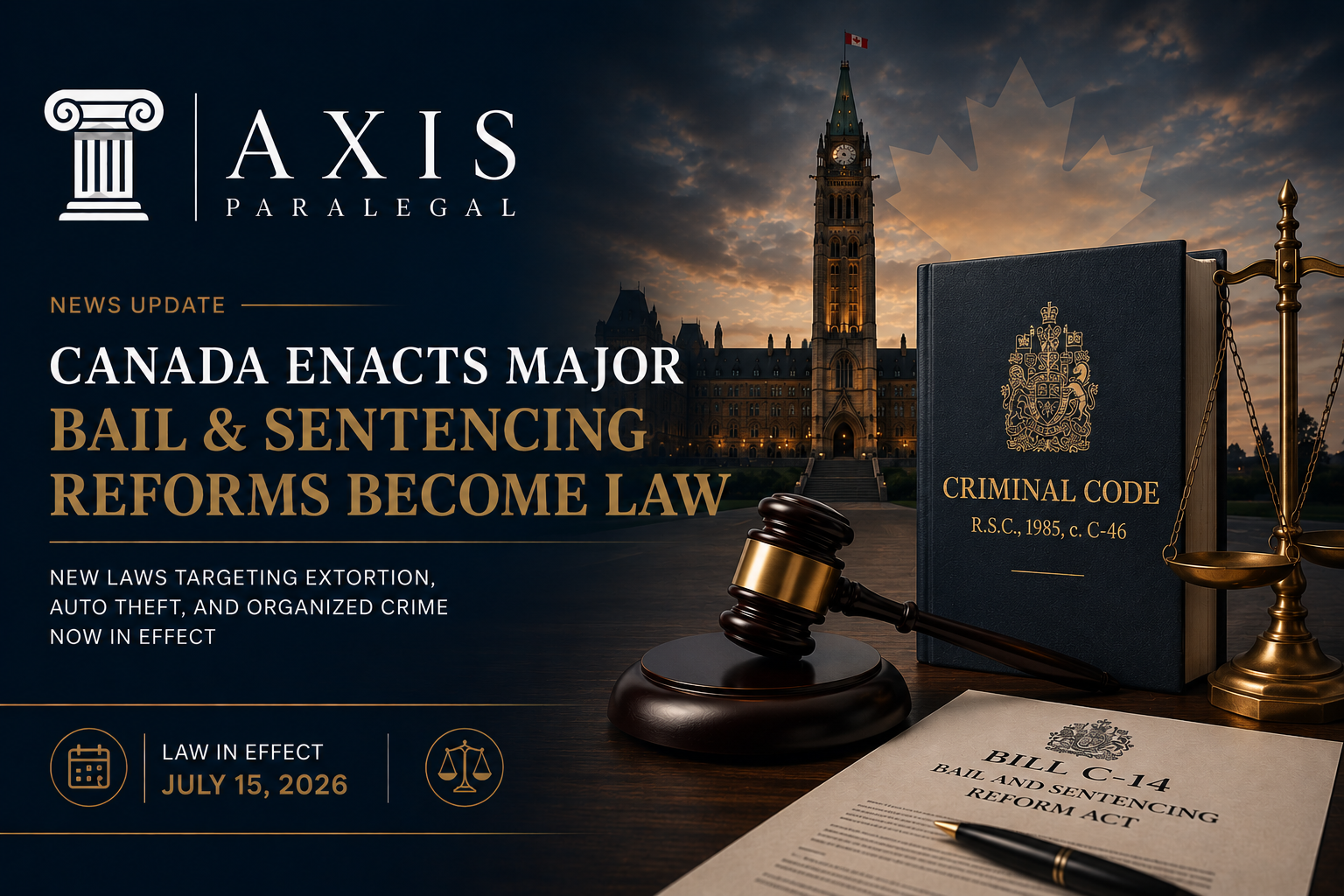
Canada has introduced significant changes to its criminal justice system following the passage of the Bail and Sentencing Reform Act (Bill C-14). The legislation received Royal Assent on June 15, 2026, and includes more than 80 amendments to the Criminal Code, the Youth Criminal Justice Act, and the National Defence Act. Most of the new provisions are expected to come into force on July 15, 2026.
The federal government states that the reforms are intended to strengthen public safety by making bail more difficult to obtain for repeat and violent offenders and by imposing tougher penalties for serious crimes, particularly those involving extortion, auto theft, organized crime, home invasions, and human trafficking.
Key Changes to Bail Laws
One of the most significant aspects of the legislation is the expansion of “reverse onus” provisions. In certain cases, individuals accused of serious offences will now be required to demonstrate why they should be released on bail rather than requiring the Crown to prove why detention is necessary.
The reforms also require courts to consider additional factors when deciding whether to grant bail, including:
Whether the alleged violence was random or unprovoked;
Whether the accused has numerous or serious outstanding charges;
Whether a weapons prohibition should be imposed; and
Whether the proposed bail plan is reliable and credible in cases where a reverse onus applies.
In addition, police are directed to detain accused persons for a bail hearing where necessary to protect the public, victims, or witnesses. New restrictions also apply to individuals acting as sureties, with courts generally prohibited from appointing a person convicted of a serious offence within the past ten years unless no suitable alternative exists.
Tougher Sentencing for Serious Crimes
The legislation introduces several sentencing reforms aimed at repeat and violent offenders. The government has specifically targeted crimes such as violent auto theft, extortion, arson, and organized crime-related offences.
Among the changes are provisions requiring consecutive sentences for certain offences, meaning offenders may be required to serve one sentence after another rather than serving multiple sentences at the same time. The reforms also add new aggravating factors that courts may consider when sentencing individuals involved in organized retail theft and offences affecting essential infrastructure.
For organized crime-related offences, courts are now required to place greater emphasis on denunciation and deterrence when determining an appropriate sentence.
Impact on Individuals Facing Criminal Charges
These reforms represent one of the most substantial changes to Canada’s bail and sentencing framework in recent years. Individuals charged with offences involving violence, organized crime, extortion, home invasion, auto theft, or human trafficking may face greater challenges in obtaining bail and could be subject to more severe sentencing consequences if convicted.
Anyone facing criminal charges should seek legal advice as early as possible to understand how the new provisions may affect their case, their eligibility for release, and potential sentencing outcomes.
Looking Ahead
The federal government has described Bill C-14 as part of a broader effort to strengthen community safety and address concerns raised by provinces, territories, municipalities, law enforcement agencies, and victims’ advocates. While supporters argue the reforms will enhance public safety, some legal organizations and civil liberties groups have expressed concerns regarding the expansion of reverse onus provisions and their potential impact on the presumption of innocence.
As the new provisions come into force, courts, legal professionals, and law enforcement agencies across Canada will begin adapting to the revised bail and sentencing framework.